
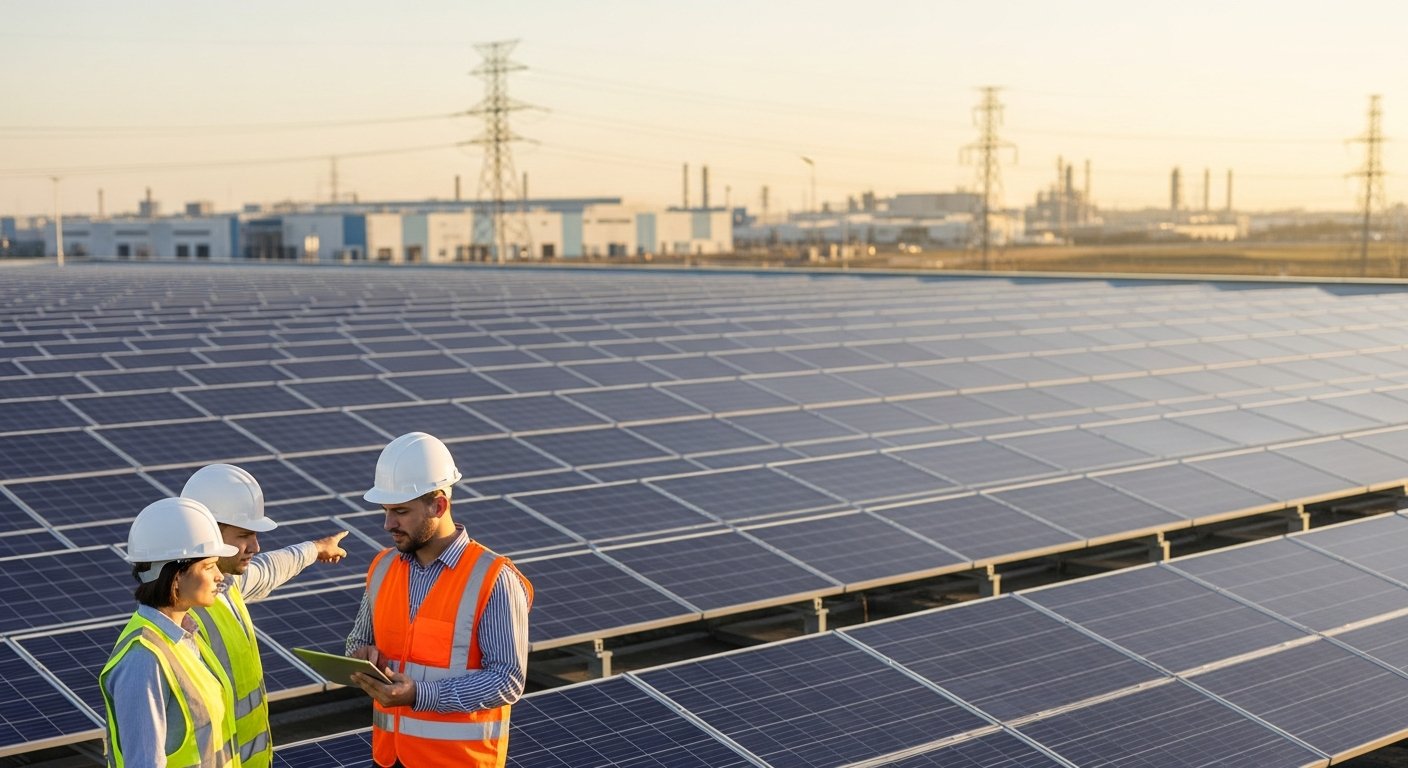
Commercial Solar System Costs and Savings in 2026
Learn how a commercial solar system can cut energy costs by 30% with federal tax credits, and why 2026 is the year to invest.

By Alex Carter
Learn more about Solar Panel Installation and Repair for guides, costs, and what to expect.
Compare Solar Panel Installation and Repair Pros Near You
Enter your ZIP code to compare top-rated local professionals and request free quotes.
Rising electricity rates and sustainability mandates are pushing businesses of all sizes to look for predictable energy costs. A commercial solar system is no longer just an environmental statement; it is a financial strategy with measurable returns. For a warehouse, a retail chain, or a manufacturing plant, the decision to install solar involves comparing upfront capital against decades of reduced operating expenses. This guide breaks down the real costs, financial incentives, and practical steps for businesses considering a move to solar energy in 2026.
Why Businesses Are Switching to Solar Energy
The primary driver for commercial solar adoption is the bottom line. Utility rates for commercial customers have risen steadily, and in many regions, demand charges can make up a large portion of a monthly bill. A commercial solar system generates electricity on-site, directly offsetting the kilowatt-hours you would otherwise purchase from the grid. This immediately lowers variable energy costs and provides a hedge against future rate increases.
Beyond direct savings, solar installations add a layer of energy independence. Businesses that generate their own power are less exposed to grid instability and price spikes. In states like California and Texas, where extreme weather has caused grid emergencies, on-site generation can keep critical operations running. Additionally, many customers and corporate partners now expect businesses to demonstrate a commitment to sustainability. Installing solar is a visible, verifiable step toward reducing your carbon footprint, which can strengthen your brand and open doors to eco-conscious contracts.
How Much Does a Commercial Solar System Cost?
The cost of a commercial solar system varies widely based on system size, equipment quality, labor rates, and site conditions. As of 2026, the average cost for a commercial installation in the United States ranges from $1.50 to $2.50 per watt before incentives. This means a typical 100 kW system, which is common for small to medium businesses, will cost between $150,000 and $250,000 before federal tax credits.
Larger systems benefit from economies of scale. A 500 kW system might cost $1.30 to $1.80 per watt, bringing the total to $650,000 to $900,000. These figures include all hardware, inverters, mounting equipment, wiring, and installation labor. They do not include battery storage, which adds significant cost but can provide backup power and increase self-consumption. The final price also depends on whether you install on a rooftop, a ground mount, or a solar canopy over a parking lot.
Key Cost Factors
- System Size: Larger systems lower the cost per watt, but require more capital upfront.
- Roof Condition: Older roofs may need repairs or replacement before solar installation, adding to the project budget.
- Electrical Infrastructure: Upgrading your main service panel or adding transformers can increase costs.
- Permitting and Inspection: Local fees and the complexity of the permitting process vary by jurisdiction.
It is important to get a detailed site assessment from a certified installer. They will evaluate your roof, shading, and energy usage to design a system that maximizes production and fits your budget. Always compare at least three quotes to ensure you are getting a competitive price.
Financial Incentives and Tax Benefits for Commercial Solar
The federal Investment Tax Credit (ITC) is the most significant incentive for commercial solar. In 2026, businesses can claim a credit equal to 30% of the total system cost. This credit is applied directly to your federal tax liability, dollar for dollar. If you cannot use the full credit in the first year, it can carry forward to future tax years. This is not a deduction; it is a credit that reduces the actual tax you owe.
In addition to the ITC, many states and utilities offer their own incentives. These can include cash rebates, performance-based incentives, or accelerated depreciation. The Modified Accelerated Cost Recovery System (MACRS) allows businesses to depreciate the solar asset over five years, which can generate substantial tax deductions. Some states also offer property tax exemptions for the added value of the solar system, meaning your property taxes will not increase because of the installation.
It is critical to verify current incentive levels with local authorities, as programs change frequently. A qualified installer or a tax professional can help you model the full financial picture, including how the system will affect your cash flow and tax position over the next several years.
Financing Options for Commercial Solar Projects
Businesses have several ways to finance a commercial solar system, each with distinct advantages and trade-offs. The best choice depends on your capital availability, tax appetite, and long-term goals.
Cash Purchase
Paying for the system outright gives you the highest long-term return. You own the system from day one, capture all incentives, and start saving on electricity immediately. The payback period is typically 5 to 8 years, after which the electricity generated is essentially free. This option is ideal for businesses with strong cash reserves and a desire to maximize ROI.
Commercial Solar Loan
A solar loan allows you to spread the cost over 10 to 20 years. You own the system, and the loan payments are often structured to be lower than the monthly electricity savings, so you see positive cash flow from month one. In this case, you still capture the ITC and depreciation benefits, which can be used to pay down the loan. This is a popular choice for businesses that want to own their system without tying up all their capital upfront.
Power Purchase Agreement (PPA) or Lease
With a PPA, a third-party developer installs and owns the system on your property. You agree to purchase the electricity it generates at a fixed rate, often lower than the utility rate. A solar lease is similar, but you pay a flat monthly fee rather than for the power produced. These options require little to no upfront capital, and maintenance is handled by the developer. However, you do not own the system, so you cannot claim the ITC or depreciation. PPAs and leases are attractive for businesses that lack the capital or tax appetite to own a system.
Each financing route has its own accounting and tax implications. Consulting with a financial advisor who understands commercial solar is a wise step before signing any agreement.
Return on Investment and Payback Period
The return on investment for a commercial solar system is driven by the cost of electricity it displaces and the incentives you receive. A typical payback period for a cash purchase is 5 to 8 years. After that point, the system continues to generate power for 25 to 30 years, creating a long stream of savings. The total ROI over the system's lifetime can be 200% to 400%, depending on local electricity rates and how much of the generated power you use on-site.
Net metering plays a huge role in this equation. If your utility offers net metering, you can export surplus power to the grid and receive credits on your bill. This effectively uses the grid as a battery, increasing the value of your solar generation. However, net metering policies are changing in many states, with some moving to lower export rates or time-of-use tariffs. A good installer will model your savings under current and likely future rate structures.
Battery storage can also improve ROI if your utility has high demand charges or if you experience frequent outages. By storing solar power and discharging it during peak periods, you can avoid expensive demand spikes. Adding a battery increases upfront cost, but it can shorten the payback period in the right circumstances.
Choosing the Right Commercial Solar Installer
The success of your commercial solar project hinges on the quality of the installer. A certified, experienced installer will handle site assessment, system design, permitting, and interconnection with the utility. They will also ensure the system is installed safely and performs to its rated capacity. The best way to find an installer is to get multiple quotes and compare them based on equipment, price, and track record.
NewSolarQuotes can help you with this process. Our service connects businesses with certified installers who have been vetted for quality and reliability. By submitting a simple quote request, you can receive competitive proposals from top-tier solar companies in your area. This saves you hours of research and ensures you are working with professionals who understand commercial installations.
When evaluating quotes, pay attention to the equipment brands, the warranty terms, and the estimated annual production. A slightly higher upfront cost can be justified by higher efficiency panels or a longer workmanship warranty. Ask for references from other commercial clients and check online reviews. The cheapest quote is not always the best value if it comes with poor customer support or substandard equipment.
Steps to Install a Commercial Solar System
Installing a commercial solar system follows a structured process. Understanding each step helps you manage expectations and prepare for the timeline, which typically takes 3 to 6 months from contract to interconnection.
- Site Assessment: An installer evaluates your roof, shading, and electrical infrastructure to determine system size and feasibility.
- System Design: Engineers create a customized design, including panel layout, inverter selection, and expected energy production.
- Permitting: The installer obtains necessary building and electrical permits from your local jurisdiction.
- Installation: Crews mount the racks, install the panels, and connect the inverters and wiring.
- Inspection and Interconnection: Local inspectors verify the installation, and the utility approves the connection to the grid.
- System Activation: Once approved, you flip the switch and start generating solar power.
Throughout this process, your installer should keep you informed and handle any issues that arise. After activation, you will want to monitor the system's performance regularly. Most inverters come with monitoring software that shows real-time production and alerts you to any faults.
Maintenance and Long-Term Performance
Commercial solar systems require minimal maintenance. The main task is keeping the panels clean, especially in dusty areas or places with little rainfall. Depending on your location, you may need to schedule professional cleaning once or twice a year. Most panels are designed to shed rain and dirt, but bird droppings and accumulated grime can reduce output by a small percentage.
Inverters, which convert DC power to AC, have a shorter lifespan than panels. String inverters typically need replacement after 10 to 15 years. Microinverters and power optimizers may last longer. Budgeting for inverter replacement is an important part of long-term planning. Most manufacturers offer 10 to 12 year warranties on inverters, and extended warranties are often available.
Overall, a commercial solar system is a low-maintenance asset. The panels themselves are highly reliable, with many manufacturers guaranteeing 80% or more of their output for 25 years. By monitoring your system and addressing any issues promptly, you can ensure it performs as expected for decades.
Environmental and Brand Benefits
Beyond financial returns, a commercial solar system provides significant environmental benefits. A 100 kW system can offset roughly 150,000 pounds of carbon dioxide over 25 years, which is equivalent to planting thousands of trees. This reduction in greenhouse gases helps combat climate change and improves local air quality.
These environmental benefits translate into brand value. Consumers are increasingly choosing to support businesses that demonstrate a commitment to sustainability. A visible solar installation is a powerful marketing tool, showing your customers that you are investing in the future. It can also help you attract top talent, as many employees prefer to work for companies with strong environmental, social, and governance (ESG) records.
In some industries, having a green energy source is becoming a requirement for doing business. Large corporations and government agencies often require suppliers to meet certain sustainability criteria. By installing solar, you can position your business to win contracts that might otherwise be out of reach.
Start Your Commercial Solar Journey Today
The case for commercial solar is compelling. Lower operating costs, generous tax incentives, and growing pressure to operate sustainably make it a smart investment for many businesses. However, the process requires careful planning and the right partner. By understanding the costs, financing options, and steps involved, you can make an informed decision that benefits your bottom line and the planet.
If you are ready to explore a commercial solar system for your business, the next step is to get detailed quotes from certified installers. NewSolarQuotes makes this easy by connecting you with qualified professionals who can assess your site and provide a tailored proposal. Submit a quote request today and take the first step toward energy independence and long-term savings.
Learn more about Solar Panel Installation and Repair for guides, costs, and what to expect.
Compare Solar Panel Installation and Repair Pros Near You
Enter your ZIP code to compare top-rated local professionals and request free quotes.