
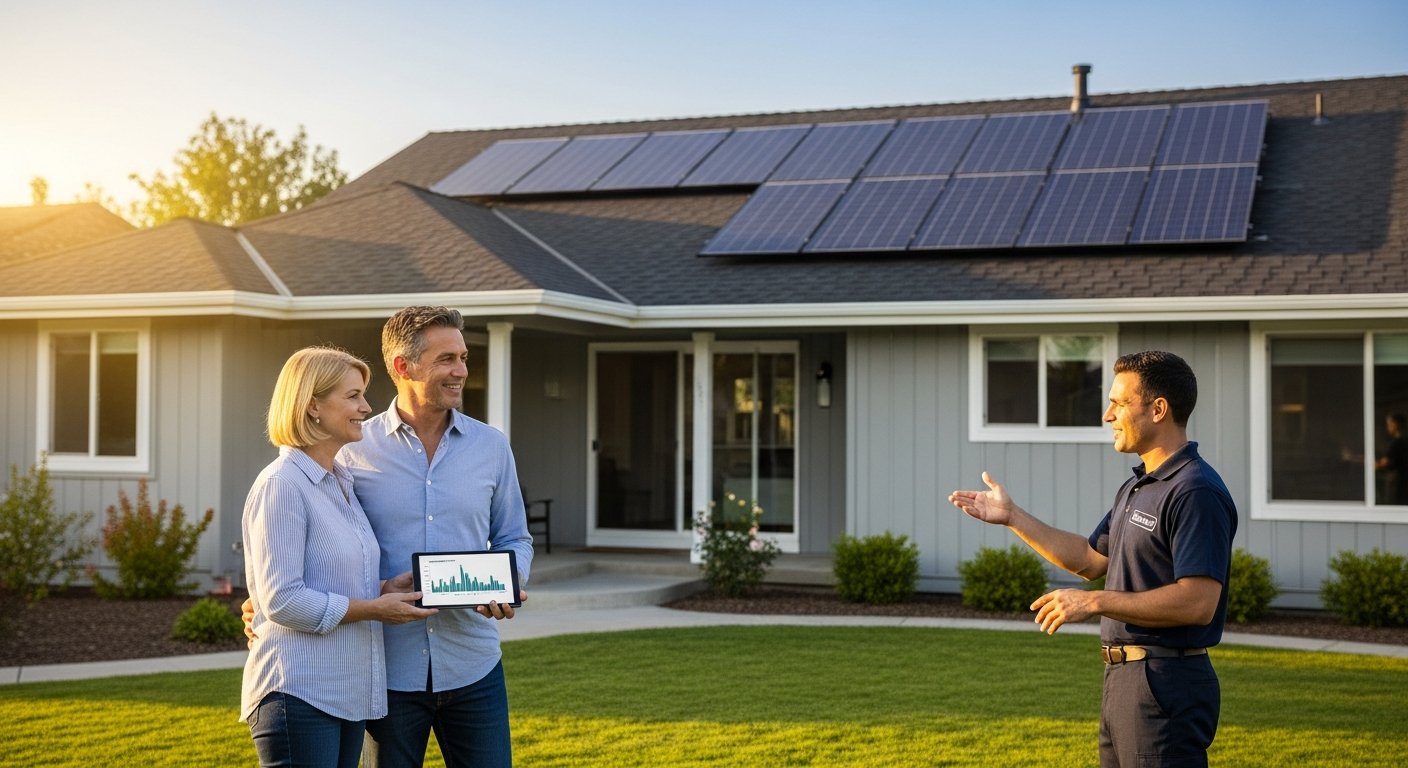
Home Solar Power System Costs and Savings in 2026
Cut your electricity bills and boost home value with a home solar power system. Learn costs, incentives, and how to get the best quotes in 2026.

By Andy Pearson
Learn more about Solar Panel Installation and Repair for guides, costs, and what to expect.
Compare Solar Panel Installation and Repair Pros Near You
Enter your ZIP code to compare top-rated local professionals and request free quotes.
Electricity bills keep climbing, and more homeowners are looking for a way to lock in lower energy costs for decades. A home solar power system offers exactly that, but the path from initial interest to installed panels can feel overwhelming. You need to understand equipment options, financing, incentives, and the installation process itself. This guide walks through each step, with clear numbers and practical advice, so you can decide if solar is right for your home.
The good news is that solar technology has matured, prices have dropped significantly, and federal incentives remain generous. In many states, a properly sized system pays for itself in six to ten years, then delivers free electricity for another fifteen or twenty years. Beyond the financial return, solar panels increase property value and reduce your carbon footprint. Let's break down everything you need to know, from how systems work to how to get the best quote.
How a Home Solar Power System Works
At its core, a home solar power system converts sunlight into usable electricity. Solar panels, also called photovoltaic (PV) modules, are made of silicon cells that create a direct current (DC) when exposed to sunlight. An inverter then converts that DC electricity into alternating current (AC), which is what your home's appliances and outlets use. The AC power flows through your electrical panel, powering your lights, refrigerator, HVAC system, and everything else.
When your panels produce more electricity than you need, that excess power is sent to the grid, and you earn credits through a process called net metering. At night or during cloudy periods, you draw power from the grid and use those credits. This is why most homeowners see a dramatic drop in their monthly utility bills, often by 70% to 100% depending on system size and local sunlight.
A typical residential setup includes three main components:
- Solar panels (usually 15 to 25 per home, depending on roof size and energy use)
- An inverter (either a single string inverter, microinverters on each panel, or a power optimizer system)
- A monitoring system that tracks production and alerts you to any issues
You may also add a battery storage unit, like a Tesla Powerwall or LG Chem, to store excess energy for use during outages or at night. Batteries add cost, typically $8,000 to $15,000, but they provide energy independence and backup power. For most homeowners, a grid-tied system without a battery is the most cost-effective starting point.
What Does a Home Solar Power System Cost in 2026?
The cost of a home solar power system has fallen dramatically over the past decade. In 2010, the average residential installation cost around $40,000 before incentives. Today, you can expect to pay between $15,000 and $25,000 for a standard 6 kW system, before the federal tax credit. That price includes panels, inverter, mounting hardware, wiring, permits, and professional installation.
Your exact cost depends on several factors:
- System size: measured in kilowatts (kW), and larger systems cost more upfront but produce more savings over time
- Panel quality: premium panels from brands like SunPower or LG cost more but offer higher efficiency and longer warranties
- Roof complexity: steep roofs, unusual angles, or multiple stories can increase labor costs
- Local labor rates: solar installers in urban areas often charge more than those in rural regions
- Battery storage: adding a battery increases the total cost by roughly 50%
To give you a concrete example, a typical 6 kW system in Texas costs about $18,000 before incentives. After the 30% federal tax credit, your net cost drops to $12,600. If your average monthly electricity bill is $150, you could save $1,800 per year, meaning your payback period is about seven years. Over the system's 25-year warranty life, you could save more than $45,000 in avoided utility costs.
It is important to note that prices vary by state and market. For instance, solar installations in California tend to be slightly more expensive due to higher labor costs and permitting fees, but the state's high electricity rates make the savings even more attractive. Conversely, states with lower electricity rates, such as Louisiana or Oklahoma, may see longer payback periods.
How to Calculate Your Payback Period
Payback period is the time it takes for your monthly savings to equal your net installation cost. Here is a simple formula:
Net cost (after tax credit) divided by annual electricity savings equals payback years.
For example, if your net cost is $12,600 and you save $1,800 per year, your payback is 7 years. After that, every dollar saved is pure profit. To get a more accurate estimate for your home, use a solar calculator or ask an installer to provide a detailed savings analysis during your quote process.
Financing Options for Solar Panels
Paying for a home solar power system in cash is the simplest and most cost-effective method, but it is not an option for everyone. Fortunately, there are several financing routes available, each with its own trade-offs.
Cash Purchase
Paying upfront means you own the system outright, and you receive the full federal tax credit. You also avoid interest charges, and you can benefit from any state or local rebates. The downside is the large initial outlay, but many homeowners view it as a long-term investment with a strong return.
Solar Loan
A solar loan allows you to finance the system with little or no money down. Monthly payments are typically lower than your average electricity bill, so you can start saving immediately. Interest rates range from 3% to 8% depending on your credit score and loan term. Some loans are secured against your home (like a home equity loan), while others are unsecured. Be sure to compare the total cost of the loan, including interest, to your potential savings.
Solar Lease / Power Purchase Agreement (PPA)
With a lease or PPA, you do not own the system. Instead, a third party installs and maintains the panels, and you pay a fixed monthly fee or purchase the electricity generated at a set rate. This option requires no upfront cost and often includes maintenance, but you do not qualify for the federal tax credit, and your long-term savings are lower compared to ownership. Also, selling a home with a leased system can be more complicated, as the new buyer must agree to take over the lease.
Home Equity Loan or HELOC
Using your home's equity to finance solar is another option. Interest rates are often lower than unsecured loans, and the interest may be tax-deductible, but you are putting your home at risk if you fail to make payments. This option is best for homeowners with stable income and good equity.
Before choosing a financing method, calculate your total cost of ownership over the system's lifespan. A cash or loan purchase generally yields the highest return, while leases and PPAs offer convenience but lower savings.
Federal and State Incentives
The federal residential solar tax credit, also known as the Investment Tax Credit (ITC), allows you to deduct 30% of your solar installation cost from your federal taxes. This credit applies to systems placed in service between 2022 and 2032, with a gradual phase-down to 26% in 2033 and 22% in 2034. In 2026, the credit is still at 30%, making this an excellent time to go solar.
Many states offer additional incentives, which can significantly reduce your upfront cost. Here are a few examples:
- California: The state has net metering (though rates have changed) and the Disadvantaged Communities - Single-family Solar Homes (DAC-SASH) program for low-income households.
- Texas: No state tax credit, but many utilities offer rebates and net metering programs. The city of Austin offers a rebate of up to $2,500.
- Massachusetts: The SMART program provides per-kilowatt-hour payments for solar generation, and the state offers a $1,000 tax credit.
- Colorado: The state offers a 10% tax credit (up to $2,000) and several utility rebates.
- Florida: No state credit, but net metering is available, and local utilities like Orlando Utilities Commission offer rebates.
It is crucial to check your local incentives, as they can change frequently. NewSolarQuotes provides state-specific guides to help you understand what is available in your area. Also, be aware that some incentives have caps or require specific equipment certifications, so always verify with your installer or local authority before signing a contract.
Choosing the Right Solar Installer
The quality of your installation is just as important as the equipment. A poorly installed system can underperform, cause roof leaks, or even void warranties. That is why it is essential to work with certified, experienced professionals. Here are the steps to find the right installer:
- Get multiple quotes: Obtain at least three quotes from different companies. Compare pricing, equipment, warranties, and the proposed system design.
- Check credentials: Look for installers certified by the North American Board of Certified Energy Practitioners (NABCEP) and verify they have proper licenses and insurance in your state.
- Read reviews: Check online reviews on Google, Yelp, and the Better Business Bureau. Pay attention to comments about communication, installation quality, and post-installation support.
- Ask about warranties: A reputable installer will offer a workmanship warranty (usually 10 years) and a manufacturer warranty on panels (typically 25 years) and inverters (often 10 to 25 years).
- Understand the contract: Review the contract carefully, including payment schedule, project timeline, and any clauses about price changes or cancellation.
One of the easiest ways to get vetted quotes is to use a referral service like NewSolarQuotes. We connect you with pre-screened, certified installers in your area, saving you time and ensuring you get competitive bids. You can request quotes through our simple online form, and we will match you with up to three local pros.
Solar Panel Types and Efficiency
Not all solar panels are created equal. The three main types are monocrystalline, polycrystalline, and thin-film. Monocrystalline panels are the most efficient and popular for homes, with efficiency ratings of 20% to 23%. They are made from single-crystal silicon and have a sleek black appearance. Polycrystalline panels are slightly less efficient (15% to 18%) but cheaper, with a blue hue. Thin-film panels are lightweight and flexible but have lower efficiency (10% to 13%) and require more roof space, so they are rarely used for residential installations.
When comparing panels, look at the efficiency rating, wattage (ranging from 300W to 400W per panel), and the temperature coefficient. A lower temperature coefficient means the panel performs better in hot weather, which is crucial in states like Texas or Arizona. Also, check the degradation rate, which indicates how much efficiency the panel loses each year. High-quality panels degrade at around 0.5% per year, meaning they still produce over 90% of their original output after 20 years.
Reputable panel manufacturers include SunPower, LG, REC, Panasonic, and Canadian Solar. Most offer a 25-year performance warranty that guarantees a certain level of production. Your installer should provide a production guarantee, which covers you if the system underperforms.
Inverters and Batteries: Key Components
The inverter is often called the brain of your solar system. It converts DC to AC and ensures your system operates safely and efficiently. There are three main types:
- String inverters: A single inverter for all panels. They are the most affordable but are affected by shading on any panel (like a string of Christmas lights).
- Microinverters: A small inverter on each panel. They optimize performance individually, are ideal for roofs with partial shading, and offer better monitoring.
- Power optimizers: These are attached to each panel and work with a central inverter. They provide similar benefits to microinverters but are slightly cheaper.
If you decide to add battery storage, you need to consider the battery's chemistry (lithium-ion is the standard), capacity (measured in kilowatt-hours, kWh), and power output (measured in kW). A typical home battery has a capacity of 10 to 15 kWh, which can power essential loads for several hours during an outage. Batteries also enable you to store excess daytime solar energy for use at night, reducing your reliance on the grid further.
The cost of batteries has been declining, but they remain a significant investment. However, some states offer incentives for battery storage, and the federal tax credit applies to batteries as well, as long as they are charged by your solar panels. In states with time-of-use rates, batteries can help you avoid expensive peak-hour electricity by discharging during those periods.
Installation Process: What to Expect
Once you sign a contract, the installation process typically takes one to three months, depending on your local permitting and the installer's schedule. Here is a rough timeline:
- Site visit and design: The installer assesses your roof, electrical panel, and sun exposure to design a system tailored to your energy needs.
- Permitting: The installer obtains the necessary permits from your local building department. This can take a few weeks.
- Installation: The actual installation usually takes one to two days. The crew mounts the panels, installs the inverter, and connects the system to your electrical panel.
- Inspection: A local inspector verifies the installation meets code and safety standards.
- Interconnection: Your utility company grants permission to operate (PTO), and you can start using your solar power.
Throughout the process, your installer should keep you informed and handle any issues that arise. After installation, you will receive instructions on how to monitor your system's performance and how to contact support if problems occur.
Maintenance and Long-Term Performance
Solar panels are remarkably low-maintenance. They have no moving parts, and rain naturally washes away most dust and debris. However, in dry or dusty climates, you may need to hose them off occasionally. It is also wise to have a professional inspection every few years to check for loose wiring, corrosion, or damage from weather or wildlife.
Your monitoring system will alert you to any drops in production, which can indicate a panel or inverter issue. Most inverters have a 10-year warranty, and panels typically come with a 25-year performance warranty. If a component fails, contact your installer to arrange a repair.
To maximize performance, trim any trees that cast shade on your panels, and keep your roof clear of debris. In snowy regions, panels often shed snow naturally, but you can brush off light snow to hasten melting. Overall, you can expect your system to produce reliable, clean energy for 25 to 30 years, with only minimal upkeep required.
Is a Home Solar Power System Worth It for You?
For most homeowners, the answer is yes. The combination of federal tax credits, falling equipment costs, and rising utility rates makes solar a sound financial investment. But the exact return depends on your local electricity rates, sun exposure, and available incentives. To get a precise estimate, request quotes from multiple installers and ask for a detailed savings analysis.
If you plan to stay in your home for at least seven years, solar is likely to pay off. Even if you move sooner, studies show that homes with solar panels sell for a premium, often 4% to 6% more than comparable non-solar homes. Plus, you gain energy independence and reduce your environmental impact.
If you are not ready for a full purchase, consider a solar loan or lease to get started with little or no upfront cost. And if you live in a state with frequent power outages, adding a battery provides peace of mind and backup power.
The key is to work with reputable installers and choose equipment that fits your budget and goals. NewSolarQuotes can help you compare quotes from top-rated local installers, ensuring you get a fair price and quality workmanship. Take the first step today by requesting a free, no-obligation quote, and see how much you could save.
Solar energy is a proven, reliable technology that has become more accessible than ever. With the right system, you can slash your electricity bills, boost your home's value, and contribute to a cleaner planet. Do your research, compare offers, and make the switch with confidence.