
Is Micro Hydropower for Home Feasibility Worth It in 2026?
Learn if micro hydropower for home feasibility and benefits makes sense for your property, including costs, savings, and environmental impact.

By Alex Carter
Find Local Pros Near You

Enter your ZIP code to compare top-rated local professionals and request free quotes.
Imagine a renewable energy system that runs day and night, regardless of weather, and can slash your electricity bill by up to 90%. That is the promise of micro hydropower, a technology that harnesses the kinetic energy of flowing water on your property. While solar panels dominate the residential renewable conversation, micro hydropower for home feasibility and benefits offers a compelling alternative for those lucky enough to have a suitable water source. This guide walks you through the critical factors, from site assessment to financial returns, so you can decide if this powerful but often overlooked technology is right for you.
Most homeowners are familiar with solar, but few realize that a small stream or creek can generate consistent, clean power. Unlike solar, which only produces during daylight hours, hydro can generate electricity 24/7, providing a stable and predictable energy supply. This consistency is a game-changer, especially for off-grid homes or those seeking true energy independence. But before you get swept away by the idea, let's examine the practical requirements, costs, and environmental considerations that determine whether this investment makes sense for your specific situation.
The Core Requirements: What Your Property Needs
Feasibility starts with a simple question: do you have a reliable water source with enough flow and drop? Micro hydropower systems, also known as pico-hydro (under 5 kW) or micro-hydro (5 kW to 100 kW), require two essential elements: head and flow. Head is the vertical distance the water falls, while flow is the volume of water passing a point per second. You need both to generate meaningful power.
Assessing your site is the first step. A rough rule of thumb is that you need at least 2 gallons per minute (GPM) of flow for every foot of head to produce a small amount of power. For a typical home using 30 kWh per day, you might need a system capable of 1-2 kW of continuous output. Here is a practical breakdown of what to evaluate:
- Head height: The greater the vertical drop, the more potential energy. A head of 10 feet or more is ideal, though some turbines can work with less.
- Flow rate: Measure the stream's flow during the driest season to ensure year-round operation. A consistent minimum flow of 5-10 GPM is a good starting point.
- Distance to your home: The longer the pipeline and electrical cable, the higher the installation cost and energy losses. Aim for a location within 200-300 feet of your electrical panel.
- Permitting and water rights: You must obtain the necessary permits and water rights from local and state authorities. This can be a lengthy process, so start early.
If your property lacks these physical attributes, a micro-hydro system is not feasible. But if you have a steep creek or a small waterfall, the potential is enormous. For comparison, consider how a solar inverter function manages the variable power from panels; a hydro system, by contrast, provides a steady stream of power, simplifying the energy management side of things.
How Micro Hydropower Systems Work
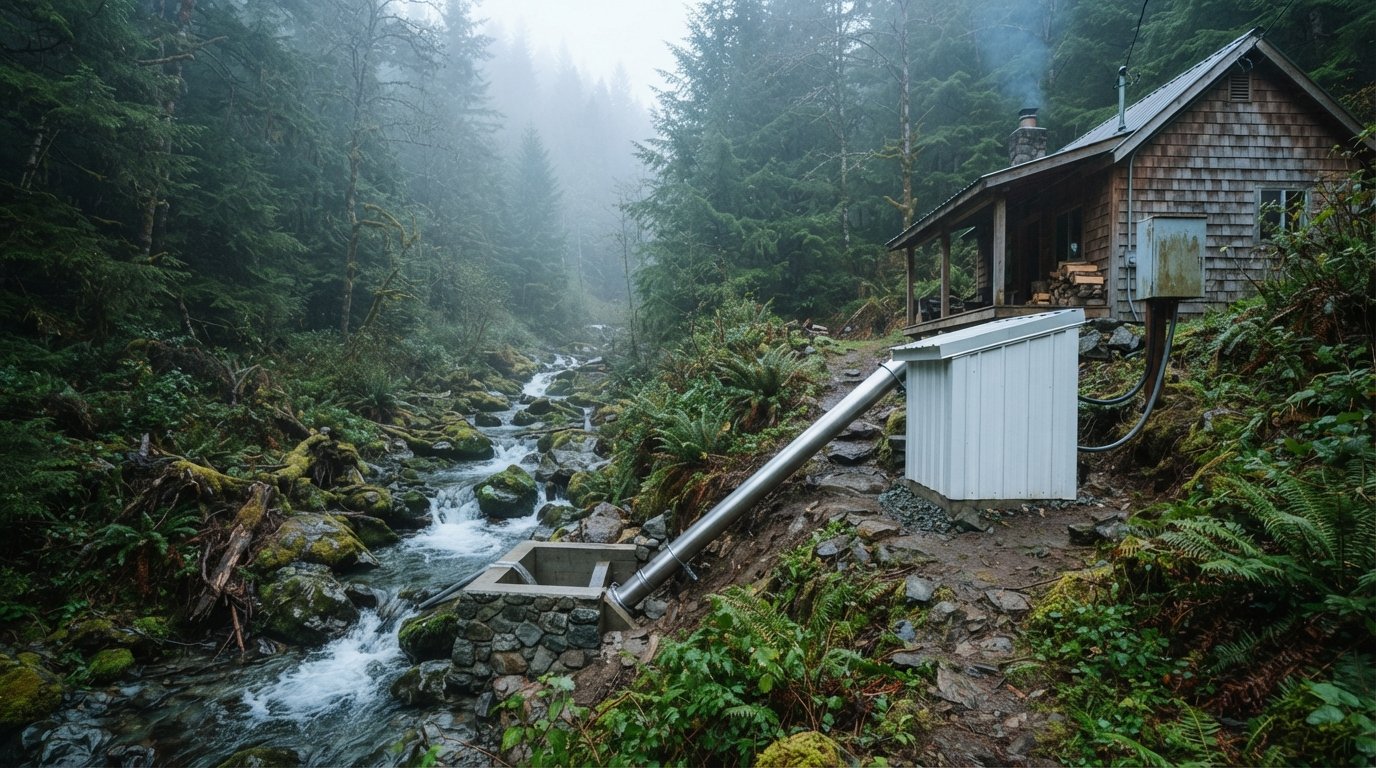
Understanding the components helps you evaluate costs and maintenance. A typical residential micro-hydro setup consists of an intake structure, a penstock (pipeline), a turbine, and a generator. The intake diverts a portion of the stream's flow, the penstock carries water downhill to the turbine, and the turbine spins a generator to produce electricity. This electricity is then conditioned by a charge controller or inverter before powering your home's circuits.
There are two main types of turbines: impulse and reaction. Impulse turbines, like Pelton wheels, are best for high-head, low-flow sites. They work by directing a jet of water against the turbine's buckets. Reaction turbines, such as Francis or Kaplan types, are suited for low-head, high-flow sites. They operate fully submerged, like a propeller. Choosing the right turbine is crucial for efficiency and is usually determined by a professional assessment.
Modern micro-hydro systems integrate seamlessly with your home's electrical system. They can be grid-tied, allowing you to sell excess power back to the utility through net metering, or they can be battery-based for off-grid living. Many systems also include a diversion load, which safely dissipates excess energy when batteries are full or the grid is down, ensuring the system operates within safe parameters.
Financial Benefits and Costs: A Realistic Look
The primary benefit for most homeowners is the dramatic reduction in electricity bills. A well-designed system can eliminate your electricity costs entirely, and with net metering, you might even receive a check from your utility. For example, a 1 kW system running continuously can generate about 8,760 kWh per year, covering the average American home's consumption. Over a 30-year lifespan, that's over 260,000 kWh, a substantial saving at current electricity rates.
However, the upfront costs are not insignificant. A complete turnkey micro-hydro installation typically ranges from $3,000 to $20,000 or more, depending on system size, site accessibility, and civil works. This includes the turbine, generator, pipeline, installation, and permitting. The good news is that operating and maintenance costs are very low, often just a few hundred dollars per year for occasional cleaning and bearing replacement. The payback period can be as short as 5 to 10 years in areas with high electricity rates, and the system can last for 50 years with proper maintenance.
Before you invest, it's wise to compare your options. The table below outlines the key financial metrics for a typical residential micro-hydro system:
Table: Estimated Costs and Savings for a 1 kW Micro-Hydro System
| Item | Estimated Value |
|---|---|
| Initial Cost (Installed) | $8,000 - $15,000 |
| Annual Maintenance | $100 - $300 |
| Annual Electricity Output | 8,760 kWh |
| Average Savings (at $0.15/kWh) | $1,314/year |
| Payback Period | 6 - 11 years |
| System Lifespan | 50 years |
These figures are estimates and can vary significantly. It's essential to get a professional site assessment and multiple quotes from experienced installers to get accurate numbers for your property. In our experience, the long-term savings are compelling, but the initial capital outlay requires careful planning.
Environmental Impact and Legal Considerations
Micro hydropower is a clean, renewable energy source, but it's not without environmental effects. Diverting water from a stream reduces the flow in the original channel, which can affect aquatic life and downstream ecosystems. To mitigate this, you must maintain a minimum flow, known as an instream flow requirement, which is determined by environmental regulations. This is a critical part of the permitting process and is often a point of contention with local authorities.
The legal landscape is complex. In the United States, the Federal Energy Regulatory Commission (FERC) has jurisdiction over most hydropower projects, though small systems under 5 MW may qualify for an exemption. However, states also impose their own water rights and permitting requirements. For example, in western states like Colorado and California, water rights are strictly regulated, and you may need a water court decree to use the water for power generation. It's imperative to consult with a water rights attorney and your state's energy office before proceeding.
Despite these hurdles, many homeowners successfully navigate the process. The key is to start early and be prepared for a bureaucratic journey. The benefits of energy independence and environmental stewardship often outweigh the administrative headaches. A well-planned project can even enhance the ecological health of the stream by maintaining a consistent flow and preventing erosion.
Comparing Micro Hydro to Other Home Renewables
When evaluating micro hydropower for home feasibility and benefits, it's natural to compare it to solar and wind. Each technology has its strengths. Solar is more versatile and easier to install but has a higher levelized cost of energy due to its intermittent nature. Wind is another option but requires consistent wind speeds and is often less predictable than water flow.
Micro hydro has a distinct advantage: capacity factor. While solar panels typically produce at 15-20% of their rated capacity, a micro-hydro system can achieve a capacity factor of 60-90%. This means for the same rated capacity, hydro produces significantly more energy. Additionally, hydro systems require less land and have no visual impact, making them more acceptable to neighbors and homeowners' associations.
Here's a quick comparison for a typical residential scenario:
- Micro Hydro: High upfront cost, very low maintenance, 24/7 production, best for remote locations with a stream.
- Solar PV: Moderate upfront cost, minimal maintenance, daytime production, suitable for most homes.
- Small Wind: Moderate upfront cost, higher maintenance, production varies with wind, requires tower and open space.
For many, a hybrid approach might be best. A micro-hydro system can provide a base load, while solar panels cover periods of high demand or when the stream flow is low. This combination can achieve near-total energy self-sufficiency. The choice ultimately depends on your site's specific resources and your budget.
If you're serious about exploring micro hydropower, we recommend using a comprehensive resource like SolarEnergy.ai to compare energy options and connect with certified professionals. They can provide a detailed feasibility study and help you understand the integration with other renewable sources.
Installation and Maintenance: What to Expect
Once you've decided to move forward, the installation process is a significant undertaking. It begins with a professional site survey to finalize the system design and obtain the necessary permits. The actual construction involves installing the intake, laying the penstock, and setting the turbine and generator. For a typical system, this can take one to three weeks, depending on the terrain and complexity.
Maintenance is refreshingly simple. The primary tasks are clearing debris from the intake screen, checking the turbine for wear, and ensuring the pipeline is intact. Unlike solar panels that need cleaning, or wind turbines that require moving part replacement, a micro-hydro system can run for years with minimal intervention. Regular checks every few months are usually sufficient.
However, you must be prepared for seasonal changes. In the winter, ice can affect flow, and in the fall, leaves can clog the intake. A well-designed system includes features like a self-cleaning screen and a pressure relief valve to handle these events. Investing in quality components and professional installation will save you time and money in the long run, ensuring your system operates reliably for decades.
In closing, micro hydropower offers a unique and powerful opportunity for homeowners with the right site. The feasibility depends on rigorous site assessment, understanding the legal and environmental requirements, and a clear picture of the financial benefits. The long-term rewards, including energy independence and minimal ongoing costs, are substantial. We encourage you to consult with experts, explore your options, and take the first step toward harnessing the power of water on your property.