
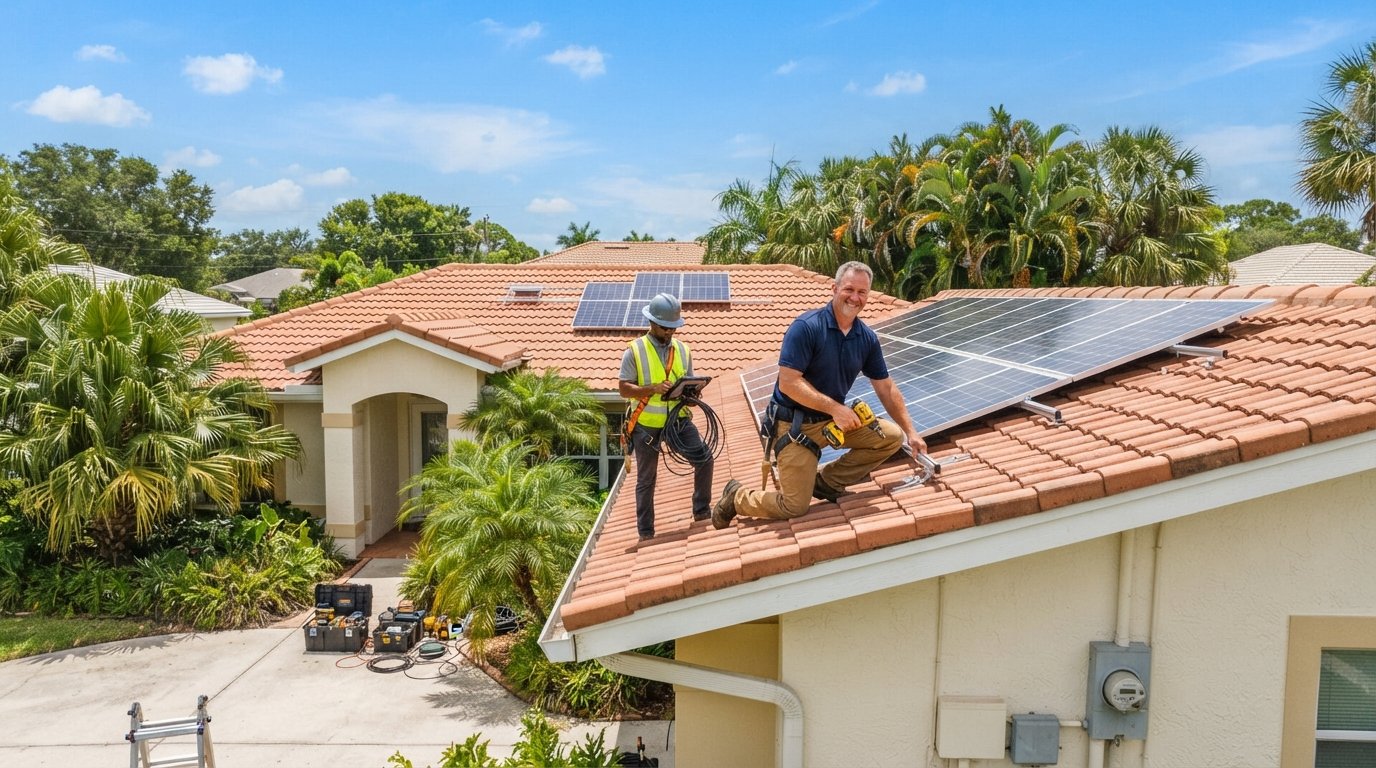
Solar Panel Installation Florida: 2026 Guide
Learn how solar panel installation Florida works, from costs and incentives to choosing the right installer, and start saving with NewSolarQuotes.
By Kassav Contributor
Learn more about Solar Panel Installation and Repair for guides, costs, and what to expect.
Compare Solar Panel Installation and Repair Pros Near You
Enter your ZIP code to compare top-rated local professionals and request free quotes.
Florida homeowners enjoy some of the highest solar potential in the United States, yet many hesitate to make the switch because of confusion about costs, incentives, and the installation process. The truth is that solar panel installation Florida has become more accessible, more affordable, and more reliable than ever before, especially with the updated federal tax credit and state-level policies that make going solar a smart financial move. Whether you are motivated by reducing monthly utility bills, increasing your home's resale value, or contributing to a cleaner environment, understanding the full picture of going solar in the Sunshine State is the first step toward making a confident decision.
This guide walks you through everything from how the installation process works and what equipment you need, to the specific financial incentives available to Florida residents, how to choose a qualified installer, and how to avoid common pitfalls. By the end, you will have a clear roadmap for navigating your own solar project, including how to get competitive quotes from vetted professionals through NewSolarQuotes. Let us help you turn Florida's abundant sunshine into tangible savings for your household.
Why Florida Is a Prime Market for Solar Energy
Florida ranks third in the nation for solar capacity, behind only California and Texas, and it consistently receives more than 230 sunny days per year. This abundant sunshine translates directly into higher energy production from your solar panels, which means greater savings on your electricity bills. In fact, the average Florida household uses more than 1,200 kilowatt-hours per month, largely due to air conditioning use in the hot and humid climate. Solar panels are uniquely suited to offset this high consumption, especially when paired with net metering, a policy that allows you to sell excess energy back to the grid.
Another factor driving solar adoption in Florida is the rising cost of electricity. Over the past decade, Florida utility rates have increased by roughly 30%, and they are expected to continue climbing as utilities invest in grid upgrades and fuel costs rise. By locking in a fixed rate for your solar energy production, you protect yourself from future rate hikes and gain more control over your monthly expenses. Additionally, solar panels increase home value by an average of 4.1%, according to a study by Zillow, making it a dual-purpose investment: it saves you money on energy and boosts your property's worth when it comes time to sell.
Beyond the financial benefits, Florida residents are increasingly concerned about energy reliability, especially during hurricane season. Solar systems paired with battery storage, such as the Tesla Powerwall or LG Chem RESU, provide backup power during grid outages, which can be a lifesaver during severe storms. While solar panels alone do not provide power during an outage, adding a battery ensures that your critical appliances, lights, and medical devices keep running even when the grid goes down. This resilience is a major selling point for many homeowners, particularly those in coastal areas prone to hurricanes.
Understanding the Solar Installation Process in Florida
The solar panel installation process in Florida typically involves several distinct steps, from the initial consultation to final inspection and activation. Understanding this process helps you set realistic timelines and avoid surprises. Most residential installations take between 6 to 10 weeks from contract signing to grid connection, depending on permitting and utility approval times.
Step 1: Site Assessment and Design
Your journey begins with a site assessment, where a solar installer visits your home to evaluate your roof's condition, orientation, tilt, and shading. The installer will also review your historical electricity usage from your utility bill to determine the right system size. For example, if your average monthly consumption is 1,200 kWh, you might need a system rated around 8 to 10 kilowatts, depending on your roof's solar potential. The installer will then design a custom solar array using software that calculates expected energy production based on your location and roof characteristics.
During this phase, the installer will also check your roof's age and structural integrity. If your roof is older than 15 years, it may need to be replaced before solar panels are installed, as panels have a lifespan of 25 to 30 years, and removing and reinstalling them for a roof replacement later will incur extra costs. It is wise to address any roof repairs or replacement now to avoid complications down the road. The design phase also includes selecting the specific solar panels and inverters that meet your energy goals and budget, with options ranging from budget-friendly polycrystalline panels to high-efficiency monocrystalline models.
Step 2: Permitting and Paperwork
Once the system design is finalized, your installer will handle the necessary permits and paperwork. In Florida, solar installations require a building permit from your local county or city, and some municipalities also require an electrical permit. The installer will submit the plans to the local building department, which typically takes 2 to 4 weeks for review and approval. Additionally, you will need to apply for interconnection with your utility company, which allows you to connect your solar system to the grid and participate in net metering. Your installer should manage these applications, but it is helpful to know what is happening and to ask for updates.
During this waiting period, you will also need to complete your financing arrangements and submit any paperwork for state and federal incentives. If you are taking out a solar loan, your lender will require documentation such as your signed contract and system specs. Your installer may also help you apply for the federal Investment Tax Credit (ITC), which is currently 30% of the total system cost, though it is claimed on your federal tax return rather than applied upfront. It is essential to work with a tax professional to ensure you understand how to claim the credit correctly.
Step 3: Installation Day
On installation day, the crew arrives at your home to mount the racking system, attach the solar panels, and wire the system to your electrical panel. Most residential installations take one to three days, depending on the system size and roof complexity. You will need to provide access to your attic and electrical panel, and the crew may need to shut off your power for a short period to safely connect the system. During installation, the crew will follow safety protocols, and you should expect a clean and organized work area. After the panels are mounted, the electrician will install the inverter, which converts the direct current (DC) produced by the panels into alternating current (AC) that your home can use.
One of the most important aspects of installation is ensuring that the roof penetrations are properly sealed to prevent leaks. Reputable installers use high-quality flashing and sealants, and they should provide a workmanship warranty that covers any leaks for a specified period, often 10 years. After the mechanical and electrical work is complete, the crew will perform a final visual inspection and test the system to ensure it operates correctly.
Step 4: Inspection and Activation
The final step before your system goes live is a series of inspections. Your local building department will conduct a final inspection to verify that the installation meets all code requirements. Your utility company will also inspect the system and may install a new bi-directional meter, which records both the energy you consume from the grid and the excess energy you send back. Once both inspections pass, your utility will issue permission to operate (PTO), and you can turn on your solar system. This process typically takes 2 to 4 weeks after installation, so do not be surprised if your panels sit idle for a little while.
Costs and Financing Options for Solar in Florida
The cost of solar panel installation Florida varies based on system size, equipment quality, and installer pricing. As of 2026, the average cost per watt in Florida is around $2.75, which translates to roughly $22,000 for a typical 8 kW system before incentives. However, after applying the 30% federal tax credit, the net cost drops to about $15,400. Many homeowners also qualify for local rebates or property tax exemptions, which can further reduce the out-of-pocket expense.
To make solar more accessible, there are several financing options available:
- Cash Purchase: Paying upfront gives you the lowest total cost and the fastest return on investment, but it requires a significant initial outlay.
- Solar Loans: Many lenders offer solar-specific loans with low interest rates and terms up to 25 years, allowing you to finance the system with little or no money down. Monthly loan payments are often less than your current utility bill, resulting in immediate cash flow savings.
- Lease or Power Purchase Agreement (PPA): With a lease or PPA, a third party owns the system, and you pay a fixed monthly rate for the energy it produces. This option requires no upfront cost, but you will not benefit from tax credits or increased home value.
When comparing financing options, it is important to calculate the total cost of ownership, including interest, and to consider the long-term savings over the 25-year lifespan of the panels. A solar loan may be the best balance of low upfront cost and long-term value, especially if you plan to stay in your home for more than 10 years. NewSolarQuotes can help you compare quotes from multiple installers, and many of them offer financing partnerships with competitive rates, so you can easily evaluate the monthly payments and total cost.
Florida Solar Incentives and Net Metering
Florida offers several incentives that make solar more affordable, though the state does not have a personal tax credit for solar installations. The most significant financial benefit is the federal Investment Tax Credit (ITC), which allows you to deduct 30% of your total system cost from your federal income taxes. This credit is available for systems installed through 2032, after which it steps down to 26% in 2033 and 22% in 2034, so acting soon maximizes your savings.
At the state level, Florida has a property tax exemption for solar systems, meaning that the added value from your solar panels is not assessed for property tax purposes. This is a valuable benefit, as it means your property taxes will not increase even though your home's value rises. Additionally, Florida's net metering policy requires utilities to credit customers for excess energy they send to the grid at the retail rate, though some utilities have recently changed these rates or added fees. It is crucial to check with your specific utility to understand the current net metering rules, as they can affect your payback period.
Another incentive to consider is the Solar Energy System Incentive Program offered by some local municipalities and cooperatives, though availability varies. For example, Orlando Utilities Commission offers a rebate of $0.04 per watt, while Jacksonville's JEA provides a performance-based incentive. These local programs can add thousands of dollars in savings, so be sure to research what is available in your area. Your installer should be knowledgeable about local incentives, but it is always wise to verify with your utility and local government.
Choosing the Right Solar Installer in Florida
Selecting a qualified installer is the most critical decision you will make in your solar project. A poor installation can lead to performance issues, roof leaks, and safety hazards, while a reputable installer will ensure your system operates at peak efficiency for decades. To find a trustworthy installer, start by asking for recommendations from friends, family, and neighbors who have gone solar. You can also use online review platforms like Google and Yelp, but be cautious of fake reviews and focus on installers with a substantial number of reviews and a high average rating.
When evaluating installers, always check their licenses and certifications. In Florida, solar contractors must be licensed by the Department of Business and Professional Regulation (DBPR) as a certified solar contractor or hold a general contractor license. Additionally, look for installers who are certified by the North American Board of Certified Energy Practitioners (NABCEP), which is the gold standard for solar professionals. NABCEP certification demonstrates advanced knowledge and a commitment to best practices. You should also verify that the installer carries workers' compensation and general liability insurance to protect you in case of accidents or damage.
Another key factor is the warranty coverage. Most solar panels come with a 25-year performance warranty, and inverters typically have a 10 to 12-year warranty. Your installer should also offer a workmanship warranty, ideally for at least 10 years, covering any issues related to the installation itself. Ask for a detailed warranty document and read it carefully to understand what is covered and for how long. Finally, get multiple quotes from different installers to compare pricing, equipment, and warranties. But do not choose solely on price: the cheapest quote may come from an underqualified installer, while the most expensive may not offer the best value. Use NewSolarQuotes to receive up to three free quotes from vetted installers in your area, making the comparison process easier and more reliable.
Common Pitfalls to Avoid During Solar Installation
Even with the best intentions, many homeowners make mistakes during the solar installation process that cost them time and money. One common pitfall is ignoring the health of your roof. If your roof is aging or has damaged shingles, installing solar panels on top of it can lead to leaks and costly repairs later. Always have a roofing professional inspect your roof before proceeding, and budget for any necessary repairs or replacement. It is far more cost-effective to replace your roof before installing solar than to remove and reinstall panels later.
Another mistake is underestimating the impact of shading. Trees, neighboring buildings, and even chimney shadows can significantly reduce your solar production. A professional installer will conduct a shade analysis, but you should also consider whether you are willing to trim or remove trees to maximize sunlight exposure. In Florida, many homes have large oak trees that provide valuable shade but can obstruct solar panels. If you cannot remove obstructions, you may need to adjust the system size or accept lower production, which will affect your savings.
Finally, do not overlook the importance of monitoring and maintenance. Most solar systems come with monitoring software that tracks your energy production, but you need to pay attention to it. A sudden drop in production may indicate a problem with the inverter or panels, and early detection can prevent more significant issues. Regular cleaning is also essential in Florida, where dust, pollen, and bird droppings can accumulate and reduce efficiency. Many installers offer cleaning services, or you can hire a professional to clean panels two to four times a year, especially after dry seasons or pollen surges.
How to Get Started: Getting Solar Quotes in Florida
Now that you understand the process, costs, and pitfalls, you are ready to take the first step toward solar panel installation Florida. The best way to start is by getting multiple quotes from reputable installers. NewSolarQuotes simplifies this process by connecting you with certified solar specialists in your area. Simply visit our website, fill out a short form with your address and average monthly electricity bill, and we will match you with up to three qualified installers who will provide custom quotes. This service is free and comes with no obligation, allowing you to compare pricing and equipment without any pressure.
When you receive your quotes, take the time to review each one carefully. Compare the system size, panel and inverter brands, warranty terms, and total cost. Ask each installer to explain their estimates for energy production and savings, and make sure they account for your specific roof orientation and shading. Also, verify that the quote includes all necessary permits, inspections, and utility interconnection fees, as some installers may quote a lower price but add these costs later. By comparing apples to apples, you can make an informed decision that will benefit you for years to come.
In addition to quotes, consider using NewSolarQuotes' solar calculators and educational resources to refine your understanding of your energy needs and potential savings. Our tools can help you estimate the payback period and return on investment for your specific situation, giving you confidence that solar is the right choice for your home. With the right installer and the right system, you can enjoy lower electricity bills, increased home value, and peace of mind knowing you are contributing to a sustainable future. Start your solar journey today by requesting your free quotes, and let the Sunshine State work for you.
Learn more about Solar Panel Installation and Repair for guides, costs, and what to expect.
Compare Solar Panel Installation and Repair Pros Near You
Enter your ZIP code to compare top-rated local professionals and request free quotes.