
Solar Panel Maintenance: 7 Vital Tasks for 2026
Learn the essential solar panel maintenance tasks to boost efficiency, prevent costly repairs, and protect your investment for years.

By Andy Pearson
Learn more about Solar Panel Cleaning for guides, costs, and what to expect.
Compare Solar Panel Cleaning Pros Near You
Enter your ZIP code to compare top-rated local professionals and request free quotes.
Your solar panels are a long-term investment, and like any investment, they need a little attention to deliver their best returns. The good news is that solar panel maintenance is not complicated or time-consuming. In fact, a few simple routines can keep your system operating at peak efficiency for 25 years or more. This guide walks you through the essential tasks, the signs that your panels need professional care, and the costs involved. By the end, you will know exactly how to protect your energy production and your wallet.
Why Does Solar Panel Maintenance Matter?
Solar panels have no moving parts, which makes them remarkably durable. However, they sit outdoors, exposed to rain, dust, bird droppings, leaves, and even snow. These elements can accumulate on the glass surface and block sunlight, reducing the amount of electricity your system generates. Over time, a dirty panel can lose 5% to 20% of its output, according to studies from the National Renewable Energy Laboratory. In dusty regions or areas with heavy pollen, that number can climb even higher.
Beyond dirt, there are electrical and structural components to consider. The inverter, which converts the direct current (DC) from your panels into the alternating current (AC) your home uses, is the most likely component to fail. Loose wiring, corroded connections, or a damaged roof mount can create safety hazards or cause a system shutdown. Regular checks help you catch these issues early, before they become expensive repairs.
How Often Should You Schedule Solar Panel Maintenance?
The frequency of maintenance depends on your location, the tilt of your panels, and local weather patterns. In most areas, a thorough cleaning twice a year is sufficient. However, if you live in a region with frequent dust storms, nearby construction, or heavy bird activity, you may need to clean quarterly. Rain does help rinse away loose dirt, but it cannot remove stubborn grime like bird droppings or dried sap.
For professional inspections, an annual checkup is a wise investment. A certified technician can test your system's performance, inspect wiring and mounts, and identify issues you might miss. If you have a monitoring system, you can also check your daily production numbers. A sudden drop in output, without a change in weather, is a clear signal that something needs attention.
Seasonal Considerations
In winter, heavy snow can cover panels for days, cutting production entirely. You can remove snow with a soft roof rake, but only if you can do so safely from the ground. Never climb onto a snowy roof. In autumn, falling leaves can accumulate in the corners of your panels, trapping moisture and leading to mildew. A quick leaf blow after a storm can prevent this buildup. Spring pollen and summer dust are the biggest culprits in many states, so plan your cleaning schedule around these seasons.
7 Essential Solar Panel Maintenance Tasks
Performing your own solar panel maintenance is safe and simple, provided you follow basic safety guidelines. Always turn off the system before cleaning, and never work on a wet or icy roof. If you are uncomfortable with heights, hire a professional. Here are the seven tasks that form a complete maintenance routine.
- Visual inspection from the ground: Walk around your property and look at your panels. Check for obvious damage like cracks, chips, or discoloration. Also look for loose brackets or sagging sections.
- Check the inverter display: Your inverter should show a green light and a normal operating message. If you see a red light or an error code, consult your manual or call a technician.
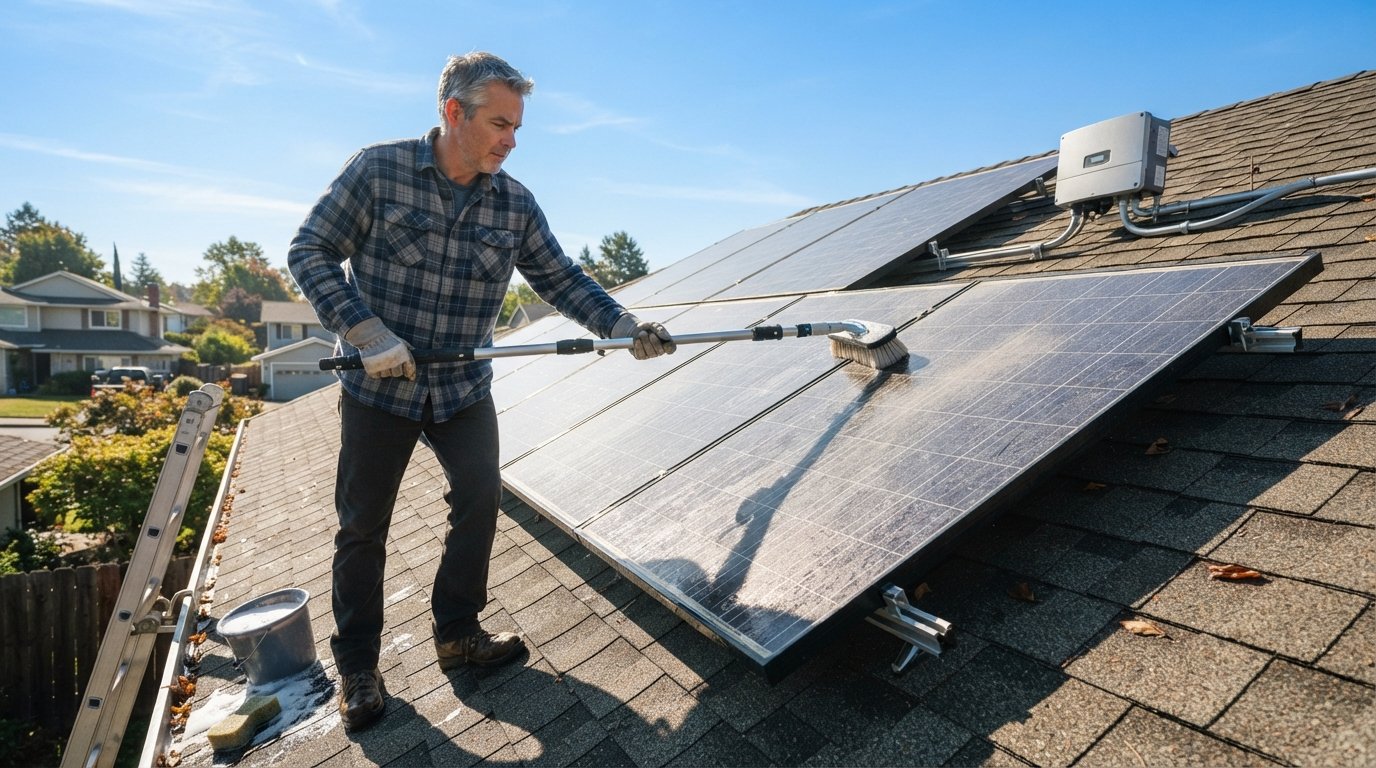
- Clean the panel surface: Use a soft brush or squeegee with a long handle and plain water. For stubborn grime, use a mild soap solution. Avoid abrasive cleaners or pressure washers, as they can damage the glass.
- Trim nearby trees: Overhanging branches can drop leaves and sap onto your panels, and they can also cast shade that reduces output. Keep branches trimmed at least 10 feet away.
- Monitor your energy bills: Compare your monthly production to the same period last year. If your output drops by 10% or more, investigate the cause.
- Inspect wiring and connections: Look for exposed wires, loose connections, or signs of rodent damage. This is best done by a professional, but you can do a visual check.
- Schedule a professional annual inspection: A certified installer can perform a full system diagnostic, including thermal imaging to detect hot spots and electrical testing to ensure safety.
While these tasks are straightforward, the professional inspection is the most valuable. Technicians have specialized tools to detect issues that are invisible to the naked eye, such as micro-cracks in cells or failing diodes. An annual checkup can extend your system's lifespan and prevent costly downtime.
Professional Solar Panel Maintenance Services
Many homeowners prefer to hire professionals for their solar panel maintenance, and for good reason. Certified technicians have the training and safety equipment to work on roofs, and they can complete a thorough service in under an hour. A typical professional visit includes a full system inspection, panel cleaning, and a performance report. The cost ranges from $100 to $300 per visit, depending on your system size and roof complexity.
If you are looking for a reliable service provider, NewSolarQuotes can connect you with vetted local installers who offer maintenance plans. These plans often include annual inspections, priority service, and discounts on repairs. For a small monthly fee, you gain peace of mind knowing that your system is in expert hands. You can request a free quote through our network, and compare options from certified professionals in your area.
What to Expect from a Professional Service
When you hire a professional, they will start by reviewing your system's performance data. They will then inspect the panels visually, looking for cracks, corrosion, and loose mounts. Using a multimeter, they will test voltage and current to ensure everything is within specifications. If they find a fault, they will explain the issue and recommend a repair. Finally, they will clean the panels using deionized water and soft brushes, leaving your system spotless and ready to produce at full capacity.
Common Solar Panel Problems and How to Prevent Them
Even with regular maintenance, issues can arise. Here are the most common problems and the steps you can take to prevent them.
Dirt and Debris Buildup
This is the most frequent cause of reduced output. Dust, pollen, and bird droppings create a film that blocks sunlight. Prevention is simple: clean your panels regularly, and trim trees that drop leaves or sap. In areas with high pollution, you may need to clean more often.
Inverter Failures
The inverter is the heart of your system, and it typically lasts 10 to 15 years, shorter than the panels themselves. The most common failure is a blown capacitor or a software glitch. Prevention involves ensuring proper ventilation around the inverter, and having it checked annually. If your inverter is old and struggling, consider replacing it with a newer, more efficient model.
Micro-Cracks and Hot Spots
Micro-cracks are tiny fractures in the silicon cells, often caused by thermal stress or impact from hail. They are invisible to the naked eye but can lead to hot spots, where a damaged cell heats up and reduces output. Prevention includes choosing high-quality panels and having a professional inspection with thermal imaging to catch these issues early.
PID Effect (Potential Induced Degradation)
This is a voltage-related phenomenon that can cause a significant loss of power, especially in hot climates. It occurs when stray currents leak from the cells, often due to poor grounding or humidity. Prevention involves using modern inverters with anti-PID features, and ensuring proper grounding during installation.
DIY vs. Professional Maintenance: Which Is Right for You?
You can perform basic cleaning and visual checks yourself, but there are limits to what you can safely do. If your panels are on a steep roof or a multi-story home, DIY maintenance is risky. In that case, hiring a professional is the smarter choice. Also, if your system is under warranty, some manufacturers require professional maintenance to keep the warranty valid. Check your warranty terms before you attempt any repairs.
For most homeowners, a hybrid approach works well: you handle simple tasks like trimming trees and monitoring bills, and you hire a professional for the annual inspection and any complex issues. This balances cost with safety and thoroughness.
The Cost of Neglecting Solar Panel Maintenance
Neglecting maintenance can lead to a slow decline in performance, and in the worst cases, a complete system failure. A study by the Lawrence Berkeley National Laboratory found that poorly maintained solar arrays can lose up to 25% of their output. Over 20 years, that could mean thousands of dollars in lost electricity savings. Additionally, a damaged panel can create a safety risk, and a failed inverter can leave you without power for days.
The good news is that maintenance costs are modest. If you clean your panels yourself, the cost is just your time and a few dollars for soap and water. Professional services cost between $100 and $300 per visit, which is a small fraction of the value they protect. In most cases, a single professional cleaning can boost production enough to pay for the service within a few months.
How NewSolarQuotes Can Help With Your Maintenance Needs
At NewSolarQuotes, we understand that maintaining your solar system is key to maximizing your return on investment. Our network includes certified installers who offer comprehensive maintenance packages, from basic cleaning to full system diagnostics. By requesting a quote through our platform, you can compare pricing and services from up to three vetted professionals in your area. This saves you time and ensures you get the best value.
Our service is free and no-obligation. You simply provide some details about your system, and we match you with local experts who can handle everything from routine cleaning to emergency repairs. We also offer educational resources to help you understand your system better, so you can make informed decisions about your maintenance schedule.
Frequently Asked Questions About Solar Panel Maintenance
Can I use a pressure washer to clean my panels?
No. Pressure washers can force water into the panel edges, causing seal failure and voiding your warranty. Use a soft brush and a gentle stream of water instead.
How do I know if my panels are underperforming?
Check your monitoring app or your monthly energy bill. If your production drops by more than 10% compared to the same month last year, it is time to investigate.
Do solar panels need maintenance in winter?
Yes, but mainly for snow removal and checking for ice damage. Use a roof rake to clear snow, and avoid using sharp tools that can scratch the glass.
Will cleaning my panels damage them?
No, if you use the correct methods. Avoid abrasive materials, harsh chemicals, and high-pressure water. Use a soft cloth or sponge with mild soap.
How often should I have my system professionally inspected?
At least once a year. This ensures that all components, including wiring and mounts, are in good condition and operating safely.
Final Thoughts on Protecting Your Solar Investment
Solar panel maintenance is not a chore to dread; it is a simple routine that keeps your system running smoothly for decades. By dedicating a few hours each year to cleaning and inspections, you can maximize your energy savings, extend your system's lifespan, and avoid costly repairs. Whether you choose to do it yourself or hire a professional, the key is to stay consistent. Your panels work hard every day, so give them the care they deserve.
If you are ready to schedule a professional maintenance service, or if you need help finding a qualified technician, request a free quote through NewSolarQuotes today. Our network of certified installers is ready to help you keep your solar system at peak performance.
Learn more about Solar Panel Cleaning for guides, costs, and what to expect.
Compare Solar Panel Cleaning Pros Near You
Enter your ZIP code to compare top-rated local professionals and request free quotes.