
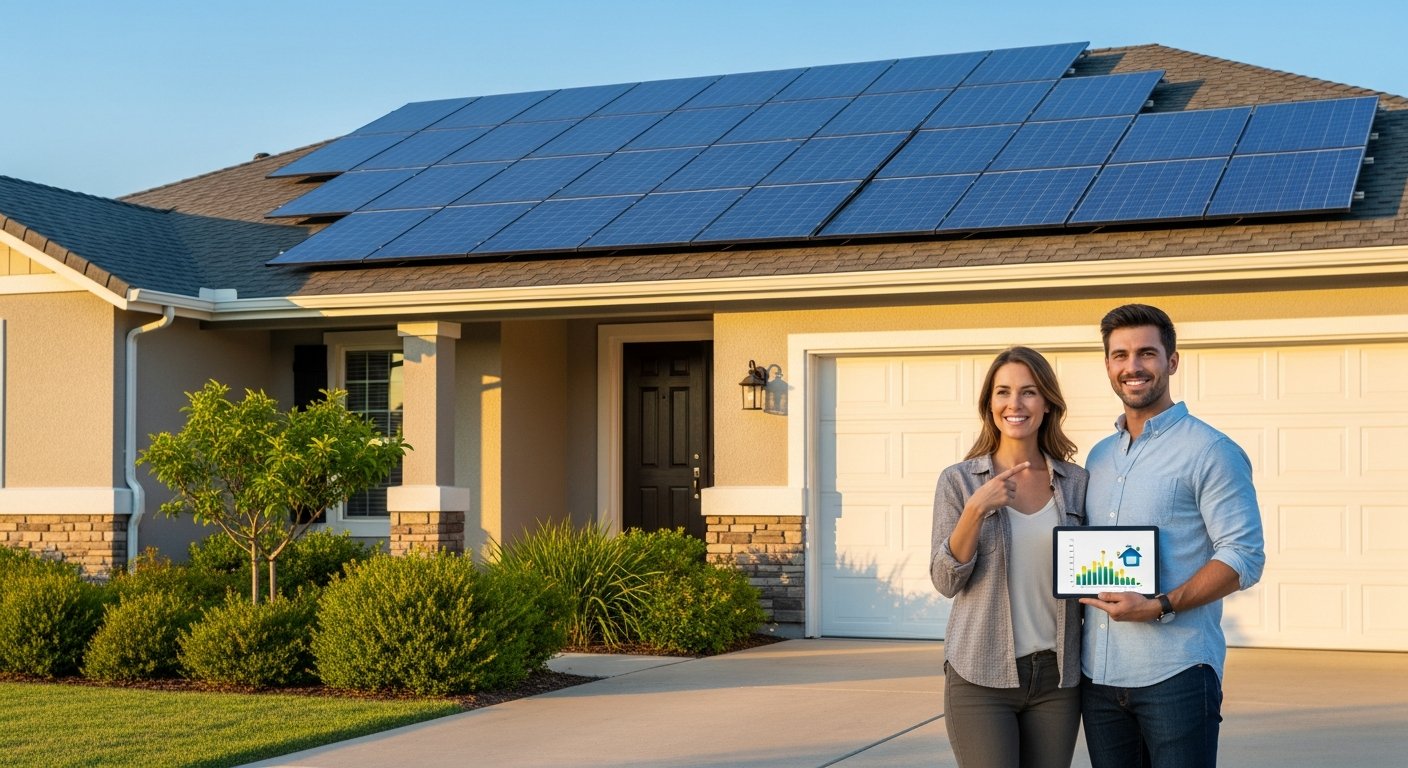
Solar Panels for Homes: Cut Bills and Raise Value
Learn how solar panels can cut your electricity bills, increase your home's value, and qualify for tax credits. Get a clear action plan for going solar.

By Alex Carter
Learn more about Solar Panel Installation and Repair for guides, costs, and what to expect.
Compare Solar Panel Installation and Repair Pros Near You
Enter your ZIP code to compare top-rated local professionals and request free quotes.
When you look at your monthly electricity bill, you might wonder if there is a way to gain more control over that recurring cost. For many American homeowners, the answer is a rooftop solar array. Solar panels for homes have moved from an early-adopter novelty to a mainstream home improvement, and the numbers explain why. The average system can reduce electricity costs by thousands of dollars over its lifetime, and with the federal tax credit still in place, the financial case has rarely been stronger. But the decision to go solar involves more than just comparing price quotes. You need to understand how the technology works, what it costs, what incentives exist in your state, and how to choose a system that fits your home and your energy habits.
This guide walks you through the entire process, from the basics of solar energy to the fine print of installation contracts. You will learn how to evaluate your home's solar potential, what to expect during installation, and how to maximize the financial return on your investment. By the end, you will have a clear action plan, and you will know exactly how to get competitive quotes from certified installers in your area.
How Solar Panels Work: A Simple Breakdown
At the heart of every solar power system is the photovoltaic (PV) cell. These cells are made of semiconductor materials, typically silicon, which release electrons when struck by sunlight. That flow of electrons creates direct current (DC) electricity. However, your home and the electrical grid operate on alternating current (AC) electricity. This is where the inverter comes in. The inverter converts the DC power from your panels into the AC power that runs your lights, appliances, and electronics.
Here is a simplified flow of how a typical home system works:
- Solar panels on your roof capture sunlight and generate DC electricity.
- An inverter (or multiple microinverters) converts that DC electricity into AC electricity.
- Your electrical panel distributes the AC power to your home's circuits, powering your appliances and devices.
- Any excess electricity is sent to the grid, often earning you credits through net metering.
- When your panels produce less than you use (like at night), you draw power from the grid as usual.
This setup allows you to offset a large portion of your electricity usage. In many states, net metering programs credit you for the excess power you feed back to the grid, which can dramatically lower your annual utility bills. The exact savings depend on your local utility rates, the size of your system, and your household's energy consumption. A solar installer can model these numbers for you based on your specific situation.
Key Benefits of Installing Solar Panels
Going solar is not just about saving money on your monthly bill, though that is a major draw. The benefits extend to your property value, your environmental impact, and your energy independence. Here are the key advantages that most homeowners care about:
- Lower electricity bills: You generate your own power, so you buy less from the utility. In some cases, you may pay only a minimum connection fee.
- Increased home value: Studies show that homes with solar panels sell for a premium compared to similar homes without them. A solar array is a visible, long-term asset that appeals to buyers.
- Protection against rising rates: When you lock in a solar power purchase agreement or own your system, you reduce your exposure to future electricity price hikes.
- Environmental impact: Solar energy is clean and renewable. By generating your own power, you shrink your carbon footprint and help reduce the demand for fossil fuels.
- Energy resilience: With a battery backup, you can keep critical loads running during grid outages, providing peace of mind in storm-prone areas.
These benefits combine to make solar a compelling investment for many households. The key is to approach the project with accurate information and realistic expectations. The following sections will help you do exactly that.
What Is the Real Cost of Solar Panels?
The upfront cost of a solar panel system is the biggest hurdle for most homeowners. As of 2026, the average cost of a residential solar system in the United States ranges from $15,000 to $25,000 before incentives, depending on system size, equipment quality, and local labor rates. That price typically includes the panels, inverter, mounting hardware, wiring, and installation. It does not include battery storage or any electrical panel upgrades that may be required.
The good news is that the federal government and many states offer incentives that significantly reduce this cost. The federal Investment Tax Credit (ITC) allows you to deduct 30% of your system cost from your federal taxes. This credit is available through 2032, and it applies to systems installed in 2026 and beyond. Many states also offer additional rebates, tax credits, or performance-based incentives. For example, homeowners in California, New York, and Massachusetts often see combined incentives that cover a substantial portion of the total cost.
It is important to get a personalized cost estimate. Every home is different, and the final price depends on factors like your roof's size and orientation, the complexity of the installation, and the quality of the equipment you choose. The best way to get an accurate number is to request quotes from multiple certified installers. They will evaluate your property and provide a detailed proposal that includes the system size, equipment specifications, and a clear price breakdown.
How to Calculate Your Solar Savings
Understanding your potential savings is crucial for deciding whether solar is worth the investment. The calculation involves a few key variables: your current electricity usage, your local utility rates, the size of your solar system, and the amount of sunlight your roof receives. A good installer will run these numbers for you, but it helps to know the basics.
Start by looking at your annual electricity consumption, which is listed on your utility bills in kilowatt-hours (kWh). The average American home uses about 10,000 to 11,000 kWh per year. Next, find your average electricity rate. As of 2026, the national average is around 16 cents per kWh, but rates vary widely by state. Multiply your usage by your rate to get your annual electricity cost. For example, a home using 10,000 kWh at 16 cents per kWh spends about $1,600 per year on electricity.
A solar system sized to cover 100% of your usage would need to produce roughly 10,000 kWh per year. To determine the system size in kilowatts (kW), you divide that number by your area's peak sun hours. Most states receive between 4 and 6 peak sun hours per day. So, a system in a 5-hour area would need about 5.5 kW to produce 10,000 kWh annually (10,000 / (5 x 365) = 5.48 kW). The cost to install a 5.5 kW system at $3 per watt would be around $16,500. After the 30% federal tax credit, your net cost drops to about $11,550.
Over the 25-year warrantied life of the panels, that system could save you thousands of dollars, even accounting for system degradation and future utility rate increases. Most homeowners see a payback period of 6 to 10 years, after which the system is essentially generating free electricity. For a more precise estimate, use a solar savings calculator or request a detailed analysis from a local installer.
Financing Options for Solar Panels
Once you know the cost, the next question is how to pay for it. There are several financing paths, each with its own pros and cons. The best choice depends on your financial situation, tax liability, and long-term plans for your home.
Cash Purchase is the simplest and most cost-effective option. You pay the full system cost upfront, and you own the system outright. This gives you the highest return on investment because you avoid interest payments. You also qualify for the full federal tax credit in the year of installation. If you have the cash available, this is the recommended route.
Solar Loans allow you to finance the system with little or no money down. There are two main types: secured loans (like a home equity loan) and unsecured loans (often called solar loans). Interest rates vary, and the loan term is typically 10 to 20 years. Your monthly loan payment will likely be similar to your old electricity bill, but you are building equity in the system and locking in your energy costs. The federal tax credit can be applied to the loan balance to reduce your principal, but you must verify that your lender allows this.
Solar Leases and Power Purchase Agreements (PPAs) are third-party ownership models. You do not own the system; a company installs it on your roof and sells you the electricity at a set rate. There is no upfront cost, and the company handles maintenance and repairs. However, you do not receive the federal tax credit, and your long-term savings may be lower than if you owned the system. These options can be attractive if you cannot benefit from the tax credit or do not want to take on a loan.
Each option has its place, and the right choice is different for every household. To make an informed decision, compare the total cost of each option over the expected life of the system. Consider factors like interest rates, monthly payments, and whether you plan to stay in your home for the long term.
Choosing the Right Solar Installer
The quality of your installation is just as important as the quality of your equipment. A poorly installed system can underperform, create roof leaks, or pose safety risks. That is why you should never rush the installer selection process. Look for a company that is licensed, insured, and certified by the North American Board of Certified Energy Practitioners (NABCEP). This certification is a mark of excellence in the solar industry.
When you interview potential installers, ask about their experience, their warranties, and their process for handling roof penetrations. Get at least three quotes and compare them side by side. Pay attention to the equipment they propose, the warranty terms, and the total price. A reputable installer will be transparent about all costs and will help you understand the system's expected performance.
At NewSolarQuotes, we simplify this process for you. Instead of cold-calling installers, you fill out one simple form, and we connect you with up to four certified solar installers in your area. These installers have been vetted for quality and reliability, so you can compare quotes with confidence. This service is free and comes with no obligation, which makes it an easy first step in your solar journey.
Solar Equipment: What to Look For
Not all solar panels are created equal. The market offers a range of panel types, each with different efficiency levels, aesthetics, and price points. The three most common types are monocrystalline, polycrystalline, and thin-film. Monocrystalline panels are the most efficient and popular for residential use, but they are also the most expensive. Polycrystalline panels are slightly less efficient but more affordable. Thin-film panels are lightweight and flexible, but they require more roof space and have a shorter lifespan.
Inverters also come in a few flavors. String inverters are the traditional choice, connecting a series of panels to a single inverter. Microinverters are installed on each panel, allowing for individual panel monitoring and better performance in shaded conditions. Power optimizers are a hybrid approach, combining the benefits of both. Your installer will recommend the best type based on your roof's layout and shading.
Battery storage is an optional but increasingly popular addition. Batteries allow you to store excess solar energy for use at night or during a power outage. They add significant cost, typically $10,000 or more, but they provide energy independence and peace of mind. If you live in an area with frequent outages or time-of-use utility rates, a battery can be a worthwhile investment.
When reviewing equipment, focus on the warranty and performance degradation. Most quality panels come with a 25-year warranty, and they are guaranteed to produce at least 80% of their original output after 25 years. A strong warranty is a sign of a manufacturer's confidence in its product.
State Incentives and Net Metering
Your total cost and payback period are heavily influenced by local policies. Net metering, for example, is a billing arrangement that credits you for the excess electricity you send to the grid. In states with full retail net metering, like New Jersey and Massachusetts, your savings can be substantial. In states with less favorable policies, like some in the Southeast, the value of exported energy may be lower, so you may want to size your system to minimize exports.
Beyond net metering, many states and utilities offer additional incentives. For example, California's Self-Generation Incentive Program (SGIP) offers rebates for battery storage. New York has the NY-Sun program, which provides upfront rebates. And some utilities offer performance-based incentives that pay you for the energy your system produces. These incentives change frequently, so it is essential to research the current landscape in your state.
To make this easier, NewSolarQuotes provides state-specific solar guides that break down the available incentives, tax credits, and net metering rules in your area. You can find these guides on our website, and they are a reliable starting point for your research. Always verify current information with your local authorities or a qualified installer, since programs can be updated or discontinued.
Solar Panel Maintenance and Lifespan
One of the most attractive aspects of solar panels is their low maintenance requirements. With no moving parts, they are designed to last for decades. Most manufacturers guarantee their panels for 25 years, and many systems continue to produce electricity well beyond that. The main thing you need to do is keep the panels relatively clean and clear of debris. Rain usually handles the job, but in dusty areas or after heavy pollen seasons, a gentle rinse with a hose can help.
You should also monitor your system's performance. Most modern inverters come with an app or online portal that shows real-time production. If you notice a sudden drop in output, it could indicate a problem with a panel or inverter. Your installer can help you troubleshoot and make any necessary repairs. Just remember that you should never attempt to work on your solar system yourself, as it involves electrical components that can be dangerous.
In addition to the panels, your inverter may need replacement after 10 to 15 years. This is a normal part of the system's lifecycle, and the cost is typically a few thousand dollars. Some installers offer extended warranties that cover inverter replacement, which can provide extra peace of mind.
Getting Started: Your Next Steps
You now have a solid understanding of how solar works, what it costs, and what to look for in an installer. The next step is to gather personalized information for your home. Start by reviewing your electricity bills to see your usage and rate. Then, use our solar cost calculator to get an instant estimate of your system size and savings potential. This tool is free and takes only a few minutes.
After you have that estimate, the best action is to request quotes from multiple installers. Our quote request service is designed to connect you with up to four certified professionals in your area. This gives you the power to compare pricing, equipment, and warranties side by side, all without making any commitments. The process is simple, and it puts you in control of your solar project.
Going solar is a significant decision, but it is also a rewarding one. With the right information and a trusted installer, you can reduce your energy costs, increase your home's value, and make a positive impact on the environment. Start your journey today, and see how much you can save.
Learn more about Solar Panel Installation and Repair for guides, costs, and what to expect.
Compare Solar Panel Installation and Repair Pros Near You
Enter your ZIP code to compare top-rated local professionals and request free quotes.