
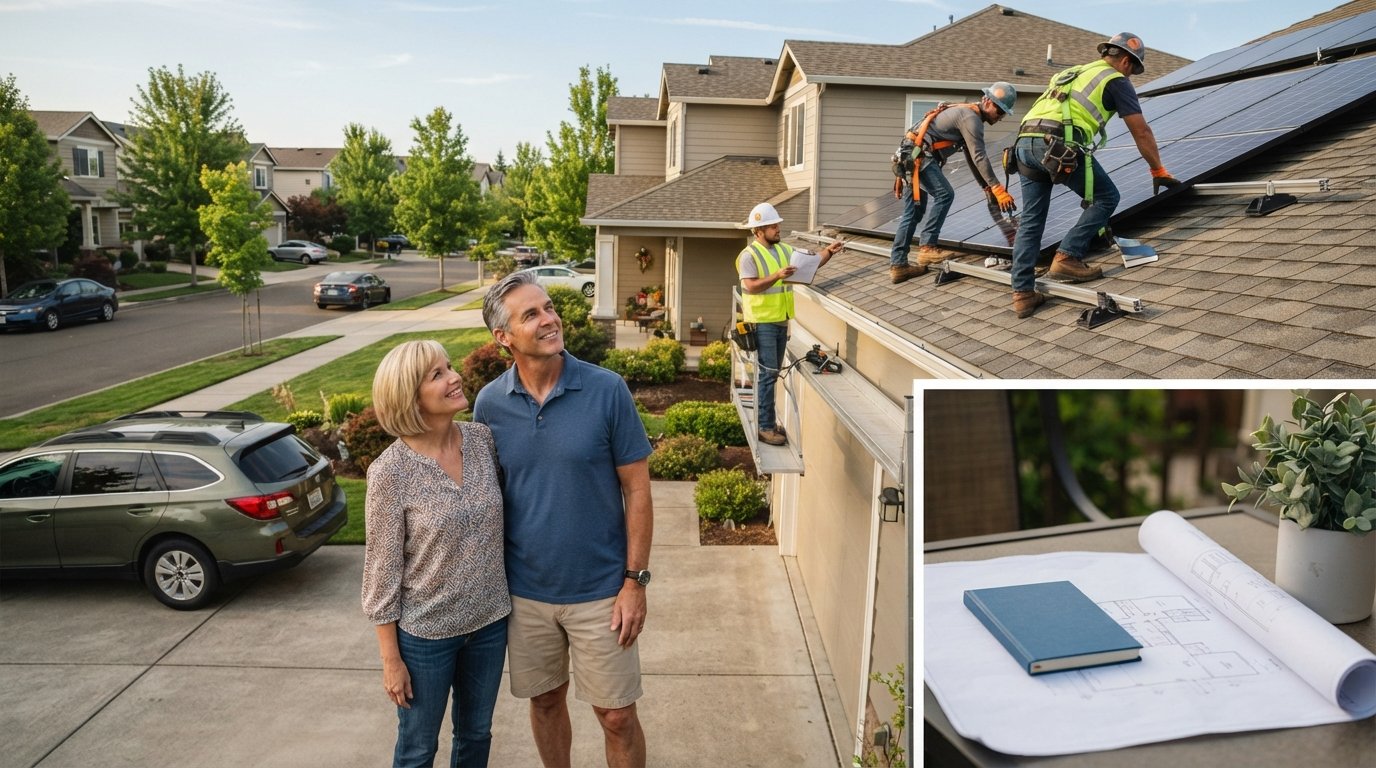
Solar Rules and HOAs: A Homeowner's Guide
Learn how to navigate local solar regulations and HOAs to get your panels approved without stress, saving time and money.
By Scott Thompson
Learn more about Solar Panel Installation and Repair for guides, costs, and what to expect.
Compare Solar Panel Installation and Repair Pros Near You

Enter your ZIP code to compare top-rated local professionals and request free quotes.
You have finally decided to go solar. You have compared panel efficiency, estimated your savings, and picked a contractor. Then you read your homeowners association (HOA) rules and realize you cannot just mount panels on your roof. This scenario plays out in neighborhoods across the United States every day. Understanding local solar regulations and HOAs before you sign a contract can save you from costly redesigns, legal headaches, and months of delays. This guide walks you through the process of navigating these rules, protecting your solar rights, and getting your system approved without unnecessary friction.
Why Local Solar Regulations Matter
Solar installations are governed by a patchwork of laws, codes, and ordinances that vary by city, county, and state. These rules affect where you can place panels, how they must be wired, and what permits you need. Ignoring them can result in fines, forced removal of your system, or even a lien on your property. On the other hand, many states have passed solar access laws that limit how much HOAs and local governments can restrict your right to install panels.
The first step in any solar project is to research your local building department's requirements. Most jurisdictions require a structural and electrical permit before installation begins. Your installer should handle this process, but you need to confirm that they are familiar with your specific city or county codes. Some areas also have historical district commissions or design review boards that impose additional aesthetic standards. For a deeper look at how these rules work, see our guide on local solar regulations explained.
HOA Rules and Solar Panels: The Legal Landscape
Homeowners associations have long been a point of friction for solar adopters. Many HOAs restrict panel placement, require screening from the street, or outright ban visible panels. However, the legal landscape has shifted dramatically in recent years. Today, at least 37 states plus Washington, D.C., have enacted solar access laws that invalidate HOA restrictions that unreasonably limit solar energy systems.
These laws vary in strength. Some states, like California and Florida, have very robust protections that allow homeowners to install panels as long as they meet basic safety and aesthetic guidelines. Other states, like Texas and Arizona, have more moderate protections that still allow HOAs to enforce reasonable restrictions on panel placement and visibility. The key phrase is "reasonable restriction." An HOA cannot ban solar outright, but it can require that panels be installed in a location that minimizes visual impact, as long as that location does not significantly reduce the system's efficiency.
Understanding Your State's Solar Access Law
Before you approach your HOA, you need to know exactly what your state allows. The Database of State Incentives for Renewables and Efficiency (DSIRE) is an excellent resource for this. Look up your state's solar access law and read the specific language. Pay attention to what constitutes a "reasonable" restriction. For example, many laws prohibit HOAs from requiring panels to be placed on the back of the roof if that orientation would reduce energy production by more than a certain percentage.
You should also check if your state has a solar easement law. Solar easements are voluntary agreements between neighbors that protect your access to sunlight. While not directly related to HOAs, they can become relevant if your property is shaded by a neighbor's trees or future construction. Understanding these nuances will give you a confident foundation when you present your case to the HOA.
How to Get HOA Approval for Your Solar System
Getting HOA approval is a process that requires patience and preparation. The first step is to read your HOA's governing documents, including the declaration of covenants, conditions, and restrictions (CC&Rs) and any architectural guidelines. Look for specific sections on solar panels, rooftop equipment, or exterior modifications. Many HOAs have updated their rules in recent years, so you may find that they already have a solar panel approval process in place.
Once you understand the rules, you need to submit a formal architectural review application. This application typically requires detailed plans, including panel layout, equipment specifications, and sometimes a shading analysis. To increase your chances of approval, consider the following:
- Choose a low-profile mounting system that sits close to the roof surface.
- Select panels that have a uniform color and finish that blends with your roof.
- Place all inverters, meters, and conduit in discreet locations, such as the side of the house or inside the attic.
- Schedule a pre-application meeting with the HOA board to discuss your plans informally before submitting the formal request.
After you submit the application, the HOA has a specified time period, usually 30 to 60 days, to respond. If they deny your request, you have the right to appeal. Keep a detailed record of all communications and decisions, as you may need this documentation if the dispute escalates to legal action.
What to Do If Your HOA Denies Your Solar Request
If your HOA denies your application, do not panic. First, review the denial letter carefully. The HOA must cite a specific rule or reason for the denial. If they claim your panels are an eyesore, ask for a written explanation of how they define that term. If they claim the panels violate a safety code, ask for the specific code reference. In many cases, denials are based on subjective aesthetic judgments that do not hold up under state law.
Your next step is to educate the board. Send them a copy of your state's solar access law and explain how their denial conflicts with it. You can also offer a compromise, such as adjusting the panel layout or adding a vegetative screen. Many HOAs are willing to work with homeowners who approach the situation cooperatively.
If the HOA continues to deny your request, you have legal options. Most state solar access laws include a private right of action, meaning you can sue the HOA for violating your rights. Courts in many states have ruled in favor of homeowners, awarding them attorney fees and costs. However, litigation should be a last resort. A more practical approach is to reach out to a local solar advocacy group or an attorney who specializes in solar law. Many offer free consultations.
Navigating Local Building Codes and Permitting
Beyond HOA approval, you must also comply with local building codes. These codes ensure that your solar system is structurally sound, electrically safe, and properly grounded. The permit process typically involves submitting your system design to the planning department, paying a fee, and scheduling inspections. Your solar installer should handle all of this, but you should verify that they have experience with your local jurisdiction.
One common issue is the requirement for rapid shutdown systems. The National Electrical Code (NEC) requires that solar systems have a rapid shutdown function that reduces the voltage in the conductors to a safe level within 30 seconds of activation. This is important for firefighter safety. Older systems may not meet this requirement, so if you are buying a home with an existing solar system, make sure it complies with the current code.
Another consideration is your utility company's interconnection agreement. This agreement sets the terms for connecting your solar system to the grid and participating in net metering. Net metering allows you to receive credits for excess electricity you send back to the grid. Not all utilities offer net metering, and some have different rate structures. Check with your utility early in the process to understand their requirements and potential charges.
Streamlining the Permitting Process
Many municipalities have adopted streamlined permitting processes for solar installations. The Solar Automated Permit Processing (SolarAPP+) platform, developed by the National Renewable Energy Laboratory, allows for instant approval of compliant systems. If your city uses SolarAPP+, your installer can submit your design online and receive approval in minutes. This can save weeks of waiting.
Even without SolarAPP+, you can expedite the process by ensuring your application is complete and accurate. Double-check that your site plan includes the exact dimensions of your roof, the location of all equipment, and the electrical one-line diagram. Missing information is the most common cause of permit delays.
The Role of Solar Rights in New Developments
If you are purchasing a home in a new development, you have an opportunity to address solar rules before you buy. Review the HOA covenants before you close. Many new communities have solar-friendly provisions, but some still impose significant restrictions. Ask the developer or builder about the solar approval process and whether any homeowners have already installed panels. If you are building a custom home, request that the builder pre-wire the roof for solar and include a conduit from the roof to the electrical panel. This can save you thousands of dollars later.
It is also wise to consider solar when evaluating a property's solar potential. A south-facing roof with minimal shading is ideal, but you can still achieve good production with east or west-facing panels. A professional solar installer can assess your roof's suitability and estimate annual production. This information is crucial when you present your plan to the HOA, as it demonstrates that you have chosen the most efficient layout possible.
How Solar Installers Can Help You Navigate the Rules
Choosing the right solar installer is just as important as choosing the right panels. A reputable installer will be familiar with local regulations, HOA requirements, and utility interconnection procedures. They will also have relationships with building inspectors and HOA boards, which can smooth the approval process. When you request quotes, ask each installer how they handle HOA approvals and permit applications. Some offer this as a standard part of their service, while others charge extra.
To find installers who understand the local landscape, you can use a free quote service like FreeSolarPowerQuotes, which connects you with vetted solar professionals in your area. These installers are experienced in navigating local rules and can provide guidance on everything from permit fees to HOA paperwork. Getting multiple quotes also allows you to compare how each company plans to address potential regulatory hurdles.
Case Study: A Homeowner's HOA Victory
Consider the story of a homeowner in a suburban Texas community. He wanted to install solar panels on his roof, but his HOA denied his application because the panels would be visible from the street. The HOA cited an architectural guideline that required all roof-mounted equipment to be placed on the rear of the house. However, the homeowner's roof had a south-facing front slope that was ideal for solar, while the rear slope was almost entirely shaded by large oak trees.
The homeowner contacted his state's solar rights organization, which provided him with a copy of the Texas solar access law. He then submitted a formal appeal, arguing that the HOA's restriction would reduce his system's efficiency by over 50%, which the law deemed unreasonable. He also provided a shading analysis and a letter from his installer. After a tense board meeting, the HOA voted to approve his application with a minor condition: the panels had to be a specific dark color to blend with the roof. The homeowner agreed, and his system was installed without further issue.
This case illustrates the importance of knowing your rights and being prepared to advocate for them. It also shows that compromise is often possible. Most HOAs are not trying to be obstructionist; they are trying to maintain the aesthetic character of the community. By demonstrating that your project is well-designed and compliant with state law, you can often reach a mutually acceptable solution.
Common Pitfalls and How to Avoid Them
Even with the best preparation, mistakes can happen. Here are some common pitfalls to avoid:
- Assuming your HOA will approve your initial design. Always have a backup plan, such as an alternative panel layout.
- Starting installation before you have all permits and approvals. This can lead to stop-work orders and fines.
- Choosing an installer who is not familiar with your local codes. Ask for references from projects in your area.
- Forgetting to consider the utility interconnection until after installation. Check with your utility early to avoid surprises.
Another frequent issue is the placement of equipment like inverters and batteries. These components must be accessible for maintenance and may have setback requirements from windows and doors. Your installer should design the system to meet all code requirements while minimizing visual impact. If you have an HOA, they may have specific rules about equipment placement, so review those before finalizing your design.
Final Thoughts on Solar and HOAs
Navigating solar regulations and HOA rules can feel overwhelming, but it is a manageable process when you approach it methodically. Start by researching your local and state laws, then review your HOA's guidelines, and finally work with an experienced installer who can guide you through the permitting process. Remember that solar access laws are on your side in most states, and HOAs are becoming more solar-friendly as the demand for clean energy grows.
By taking the time to understand the rules and prepare a strong application, you can enjoy the financial and environmental benefits of solar without the stress of regulatory battles. The effort you put in upfront will pay off for decades in lower electricity bills, increased home value, and the satisfaction of generating your own clean energy. So take the first step today, and soon you will be on your way to a brighter, more sustainable future.
Learn more about Solar Panel Installation and Repair for guides, costs, and what to expect.
Compare Solar Panel Installation and Repair Pros Near You
Enter your ZIP code to compare top-rated local professionals and request free quotes.